Product

Product Overview / Odor technical diagnosis

Odor technical diagnosis

1. Odor technical diagnosis

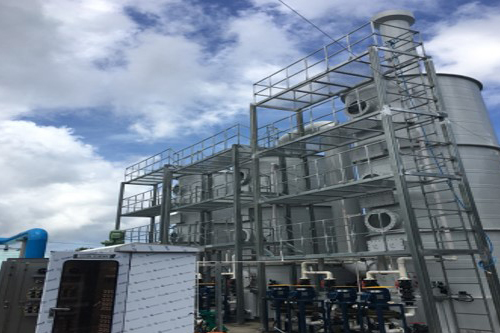
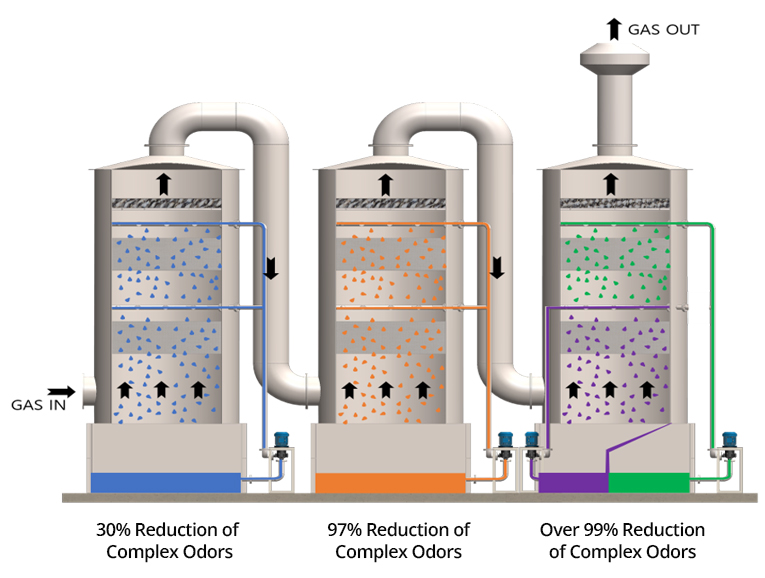
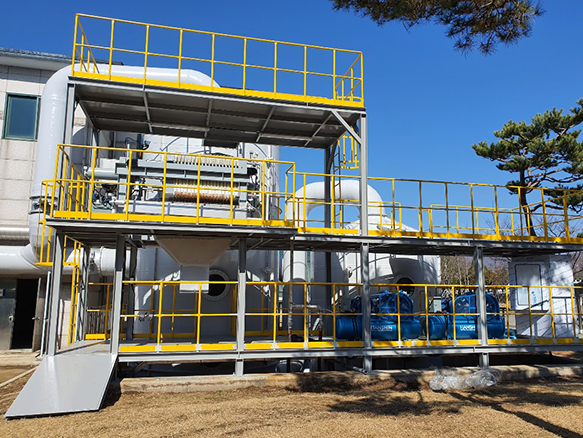
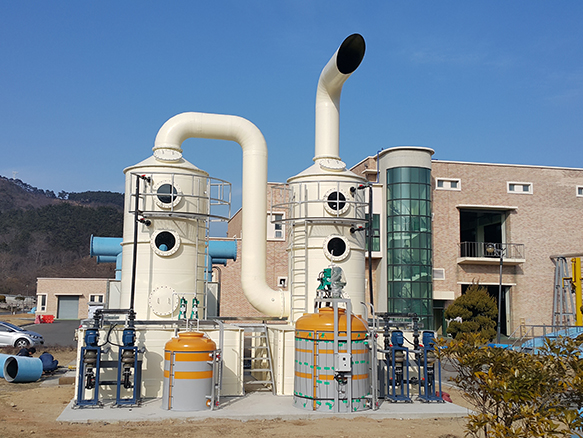
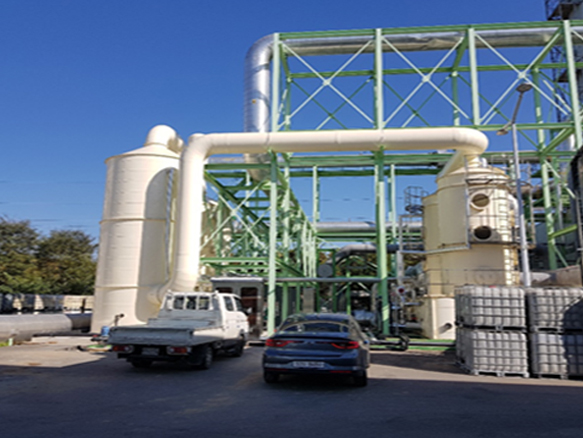
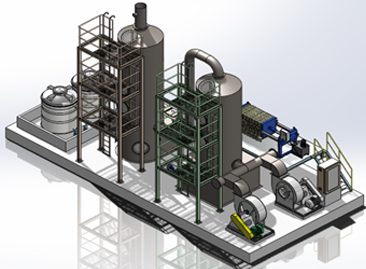
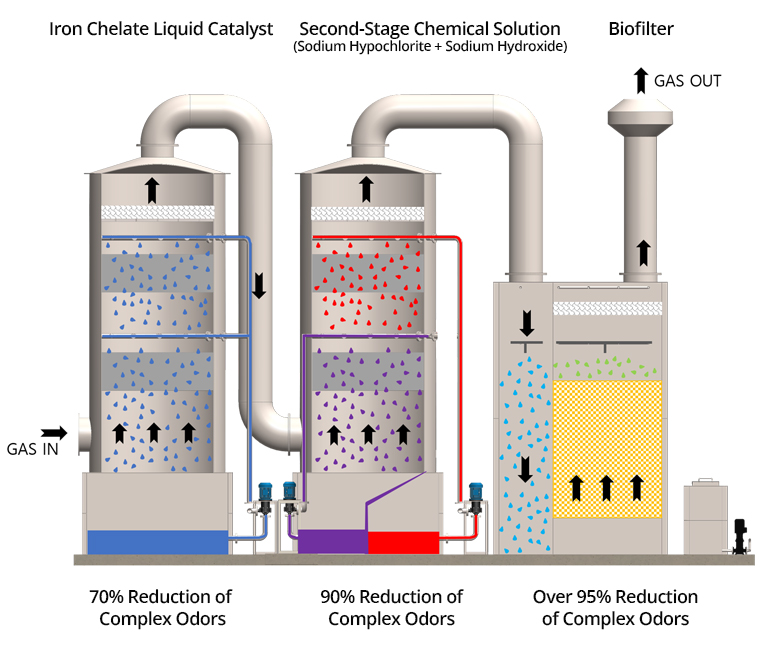
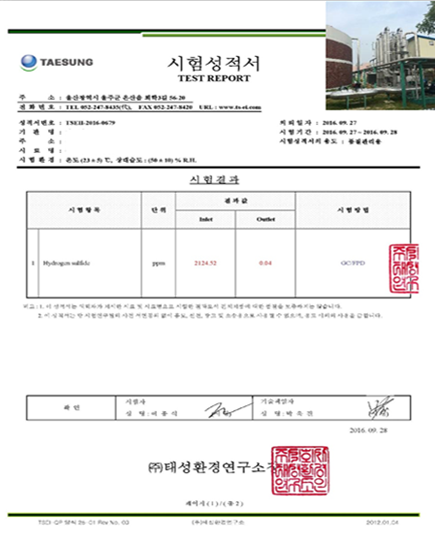
Multi-stage Deodorization Technology -Our odor control facilities are designed as multi-stage deodorization systems that remove complex odors step by step. At each treatment stage, we apply optimized chemicals and process technologies to achieve a hydrogen sulfide removal rate of over 99.9%.
(Certified Technology No. Gwangju–Jeonnam-20180401-4-01)

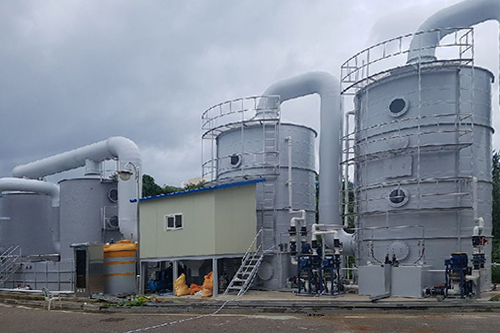
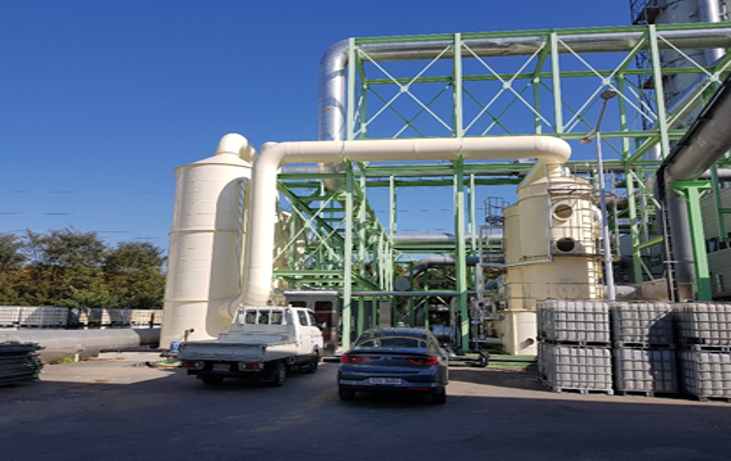
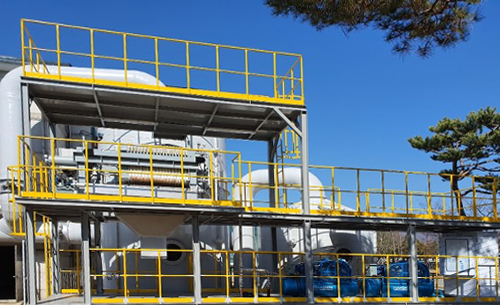
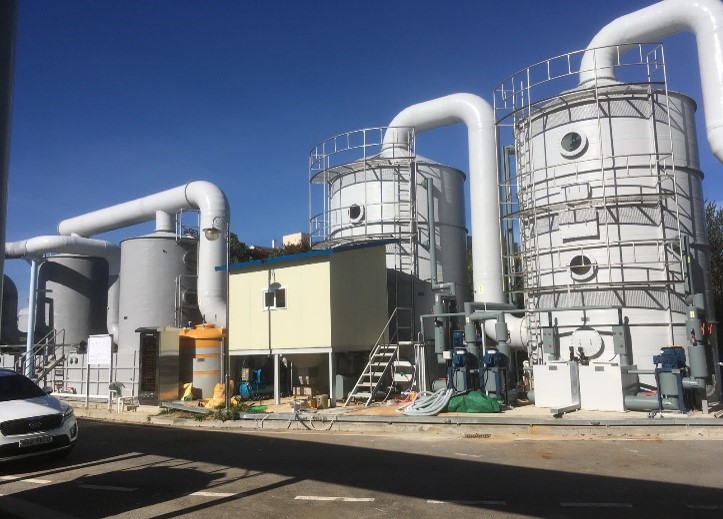
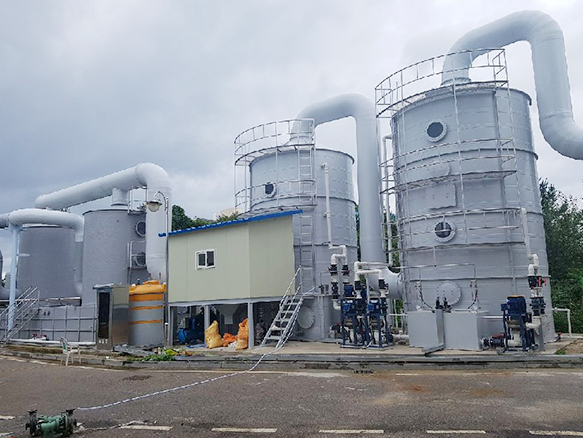
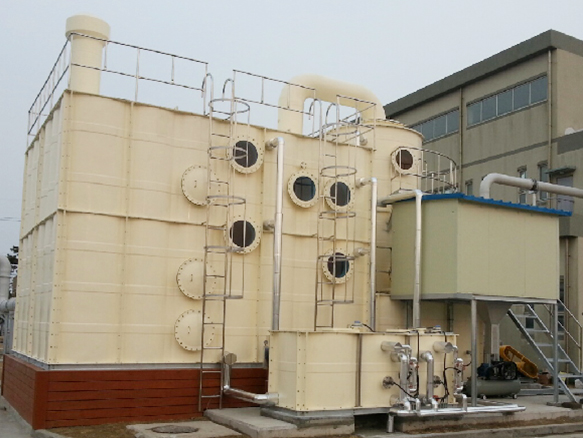
Jumunjin Agro-Industrial Complex Terminal Wastewater Treatment Plant (670 m³/min)

Osan Environmental Center (700 m³/min)

Jeju Environmental Facilities Management Center – Leachate and Food Waste Pressate Pretreatment Facility (200 m³/min)

Multi-stage Deodorization Technology
(Certified Technology No. Gwangju–Jeonnam-20180401-4-01)

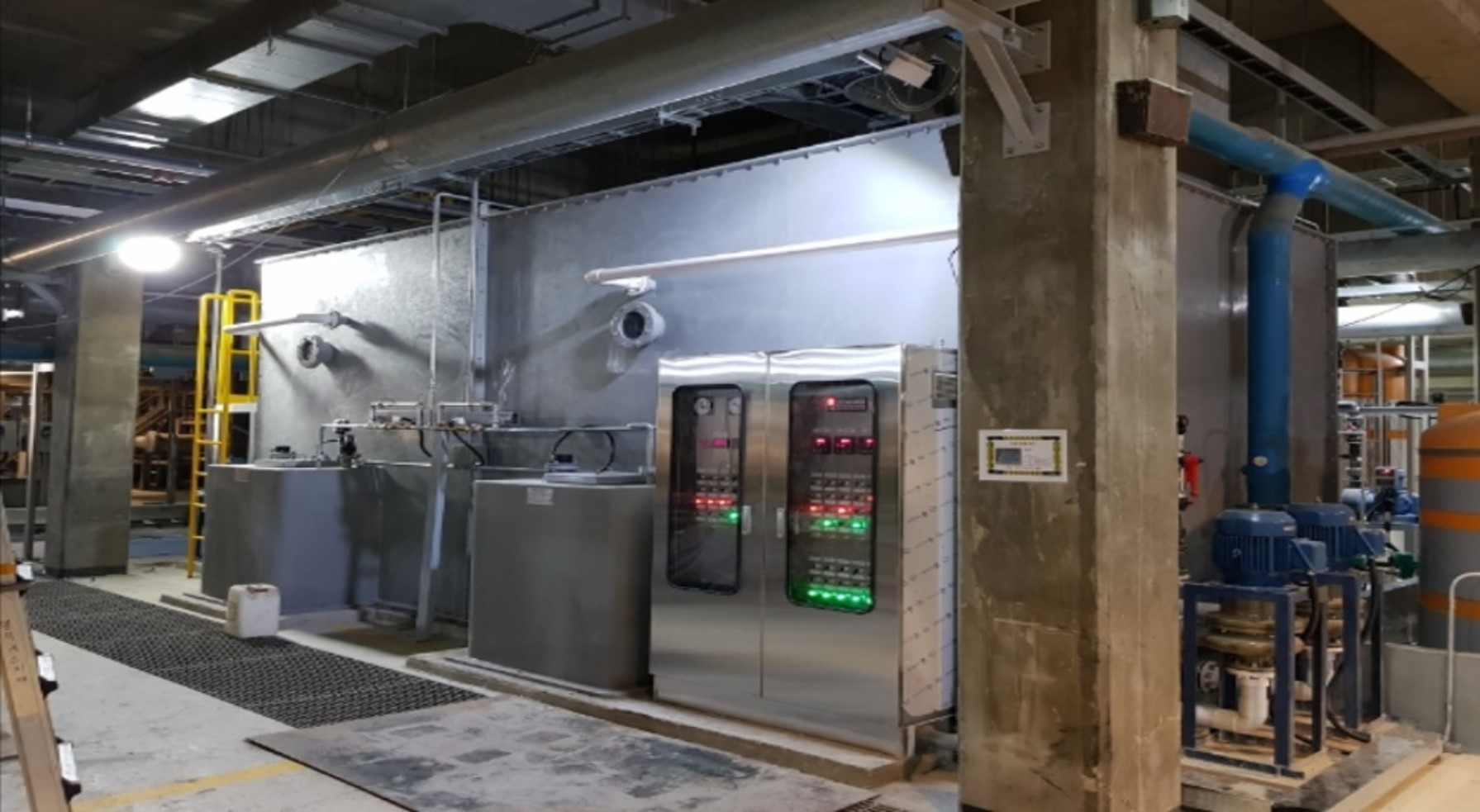
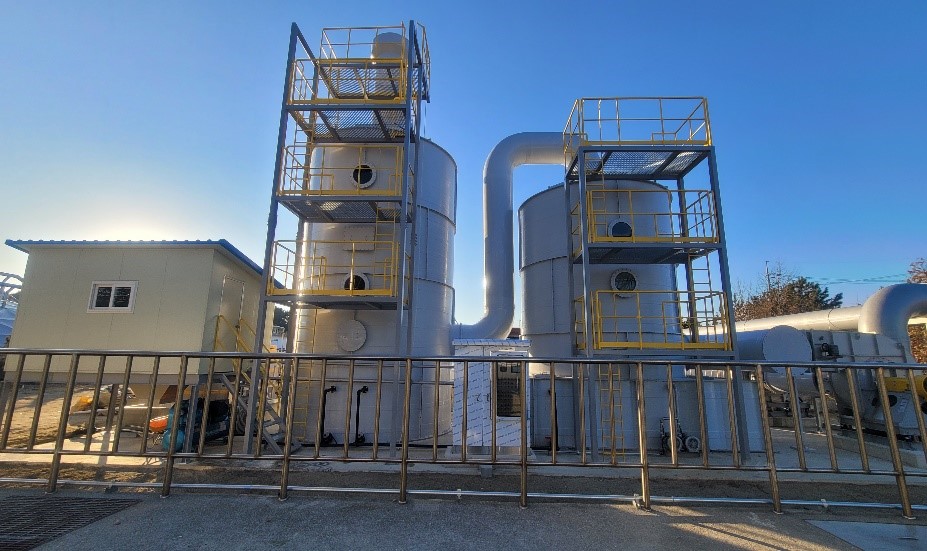
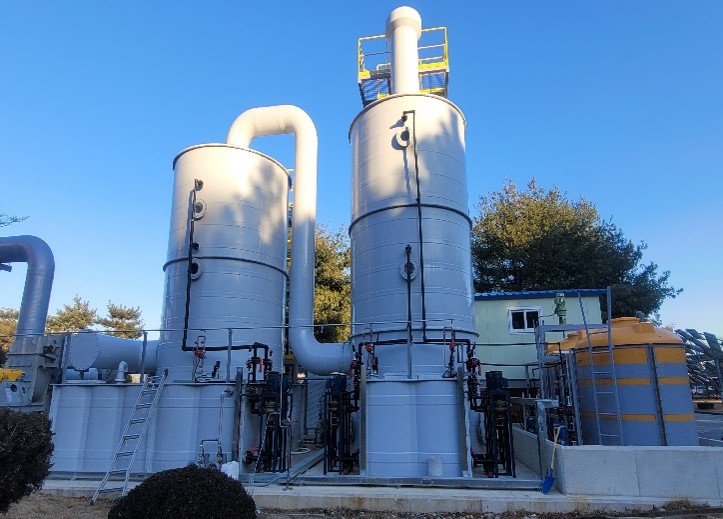
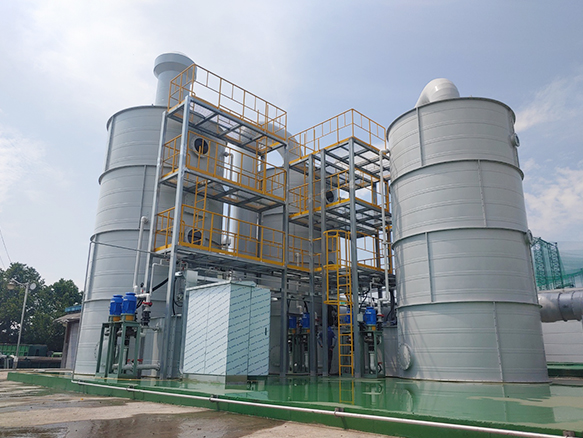
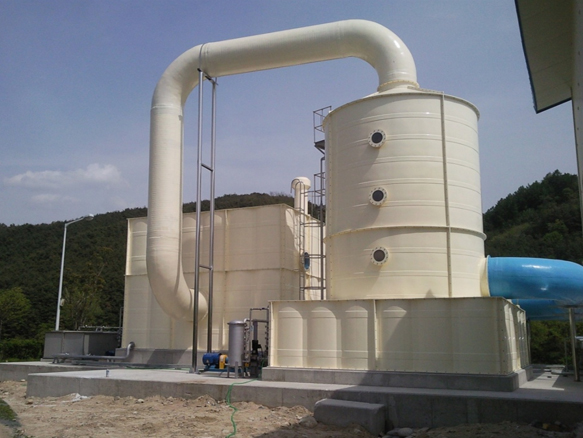
Yongin Respia (500 m³/min)

Ulsan Bangojin No. 2 Wastewater Treatment Plant (180 m³/min)

Capital area Landfill Site 50 MW Landfill Gas Power Plant (450 m³/min)

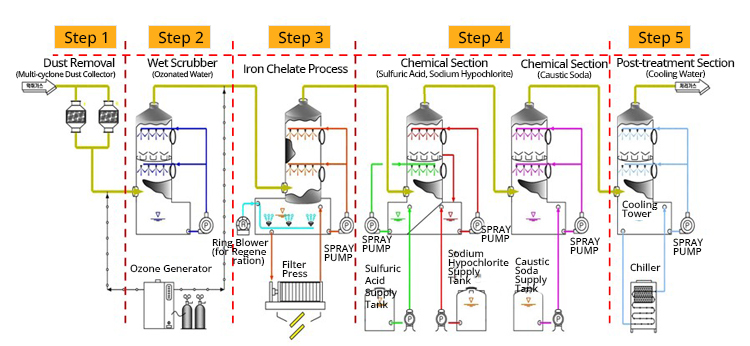
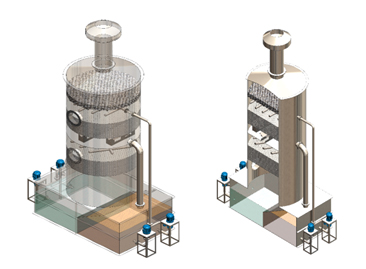
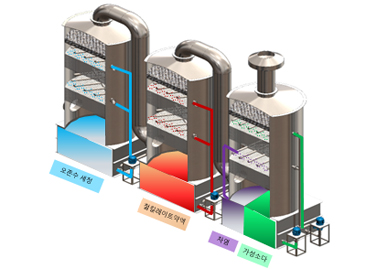
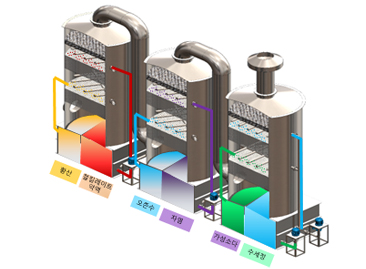
System Configuration of Multi-stage Deodorization Technology

• Medium/Low-concentration Deodorization

• High-concentration Deodorization
– Arrangement can be adjusted according to gas characteristics.

1st stage 2 or 3-stage deodorizer
(Iron-chelate chemical solution + sodium hypochlorite or caustic soda)

2nd stage 3 or 5-stage deodorizer
(Iron-chelate chemical solution + sodium hypochlorite + caustic soda)

3rd stage 4-stage deodorizer
(Ozonated water + iron-chelate chemical solution + sodium hypochlorite + caustic soda) (For high-concentration sulfur compound odors)

3rd stage 6-stage deodorizer
(Sulfuric acid + iron-chelate chemical solution + ozonated water + sodium hypochlorite + caustic soda + water scrubbing) (For high-concentration complex odors)

Multi Deodorization Technology

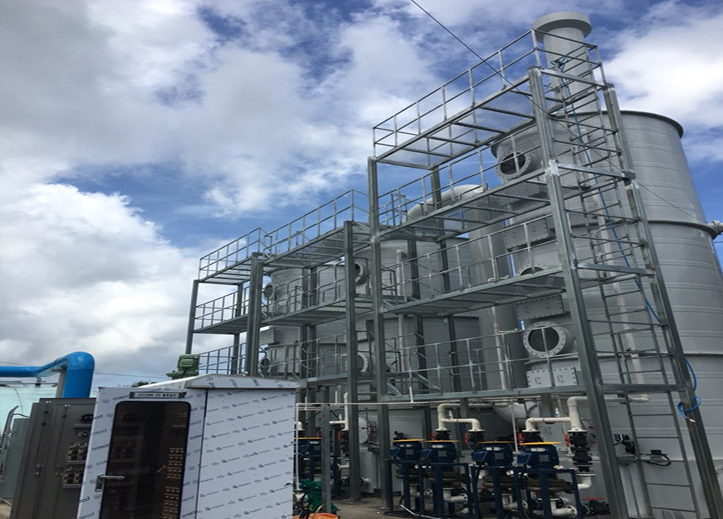
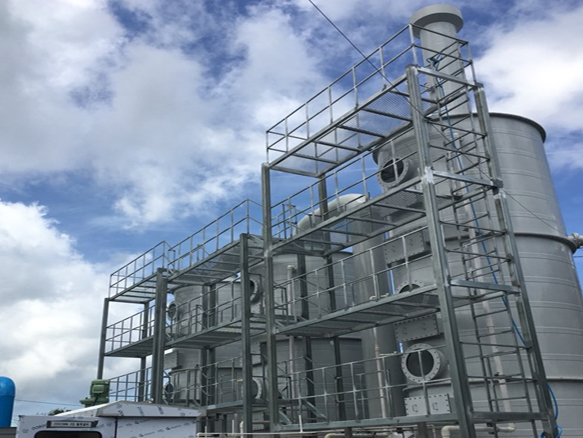
Ulsan Bangojin Sewage Treatment Facility (500 m³/min)

Hamyang Livestock Manure Public Treatment Facility (750 m³/min)

Jumunjin Sewage Treatment Facility (190 m³/min)

2. Key Features of the Technology

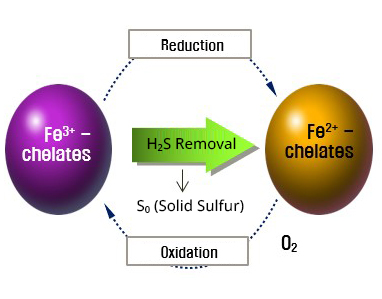
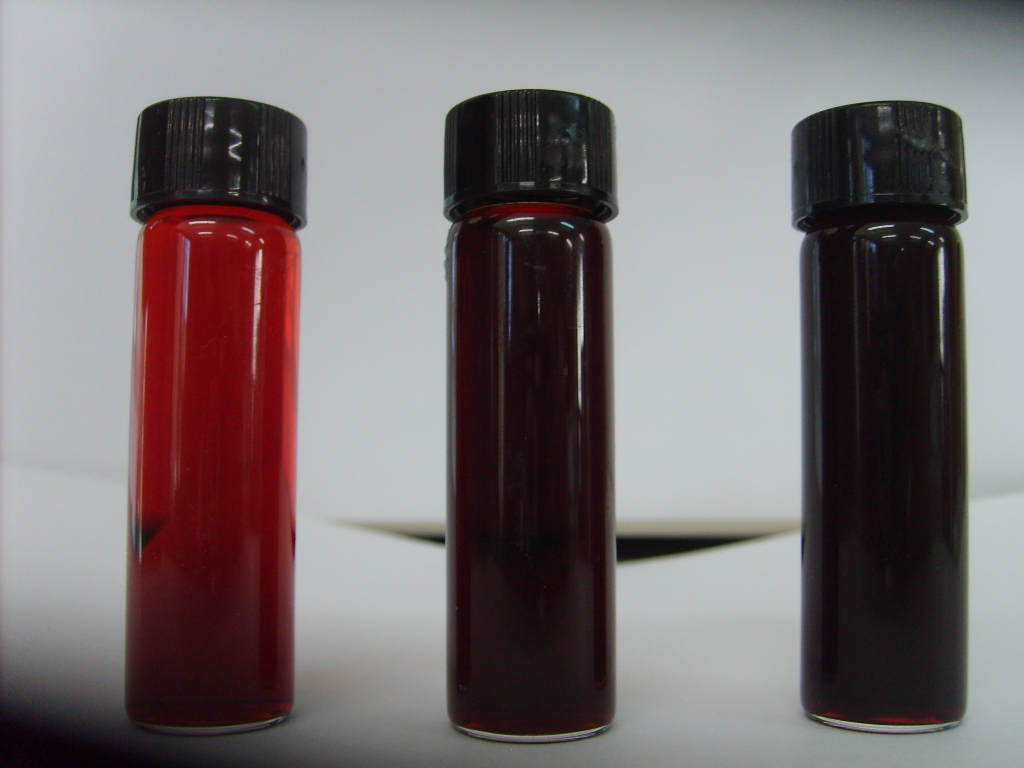
Principle of the Iron-Chelate Solution

Core Chemical Reactions

Principle of the Iron-Chelate Solution

category
Our Technology (multi-stage Deodorizer)
Conventional Technology – Chemical Scrubbing (2–3 stage)
Conventional Technology – Chemical Scrubbing + Biofilter
reaction phase
Liquid phase
Sulfur compound removal reagent
Iron-chelate solution scrubbing
NaOH, NaOCl
NaOH, NaOCl
Acidic / alkaline odor removal reagents
Iron-chelate solution, NaOCl, NaOH
HCl, H₂SO₄
HCl, H₂SO₄
Neutral / residual odor
H₂SO₄, BIO
None (neutral odors and VOCs cannot be removed)
BIO
Reagent lifetime
Reused after regeneration (fresh chemical consumption only about 10–20% per year)
Periodic consumption and replacement required
Regeneration cost
Low (power cost for air injection)
Not regenerable
Not regenerable
Reagent regeneration rate
80~90%/Year
0 %/Year
0 %/Year
Secondary pollutants
None
Large volumes of wastewater generated
Applicable concentration range
High to low (removes up to approx. 99% of odor concentration)
Medium (similar to 2-3 stage chemical scrubbing)
features
• removes >99% of hydrogen sulfide (H₂S) using a regenerable iron-chelate scrubbing solution, while minimizing mist entrainment (droplet carryover).
• The iron-chelate scrubbing solution is regenerated using oxygen in ambient air.
• Reduces the load on downstream treatment processes after hydrogen sulfide removal.
• Removes hydrogen sulfide by contacting NaOH aqueous solution with the gas in a scrubber.
• Hydrogen sulfide removal efficiency can be adjusted by changing the NaOH concentration.
• Performs primary treatment of hydrogen sulfide with chemical scrubbing.
• Treats remaining odors in a downstream biological process.
advantages
•Regenerable reagents enable semi-permanent use.
•Lower operation and maintenance costs compared with other technologies.
•Maintains hydrogen sulfide removal efficiency of 99% or higher.
•Removal efficiency is stable even when inlet hydrogen sulfide concentration fluctuates.
•No secondary pollutants are generated.
•Relatively simple removal process.
•Removal efficiency can be increased by raising NaOH concentration.
•Accumulated know-how with long-term use of this method.
•Equipment fabrication and installation are simple.
•Advantageous for low-concentration hydrogen sulfide removal.
•Simple removal mechanism.
•Operation is relatively simple compared with other technologies.
disadvantages
•Requires annual make-up of approximately 10–20% to compensate for filter losses and natural evaporation.
•Power cost is incurred for air injection during regeneration.
•Very high chemical consumption cost to achieve higher removal efficiency.
•No regeneration; reagents must be discarded after use.
•Wastewater treatment costs are incurred.
•Handling of strong chemicals involves safety risks.
•No reagent regeneration, resulting in higher operating costs.
•Low hydrogen sulfide removal efficiency can lead to biofilter microorganism die-off and internal corrosion due to pH.
•Frequent reseeding of microorganisms is required.

3-1. case study : odor control system improvement – Jumunjin, Gangneung

location
improvement summary
previous process
case image
process after improvement
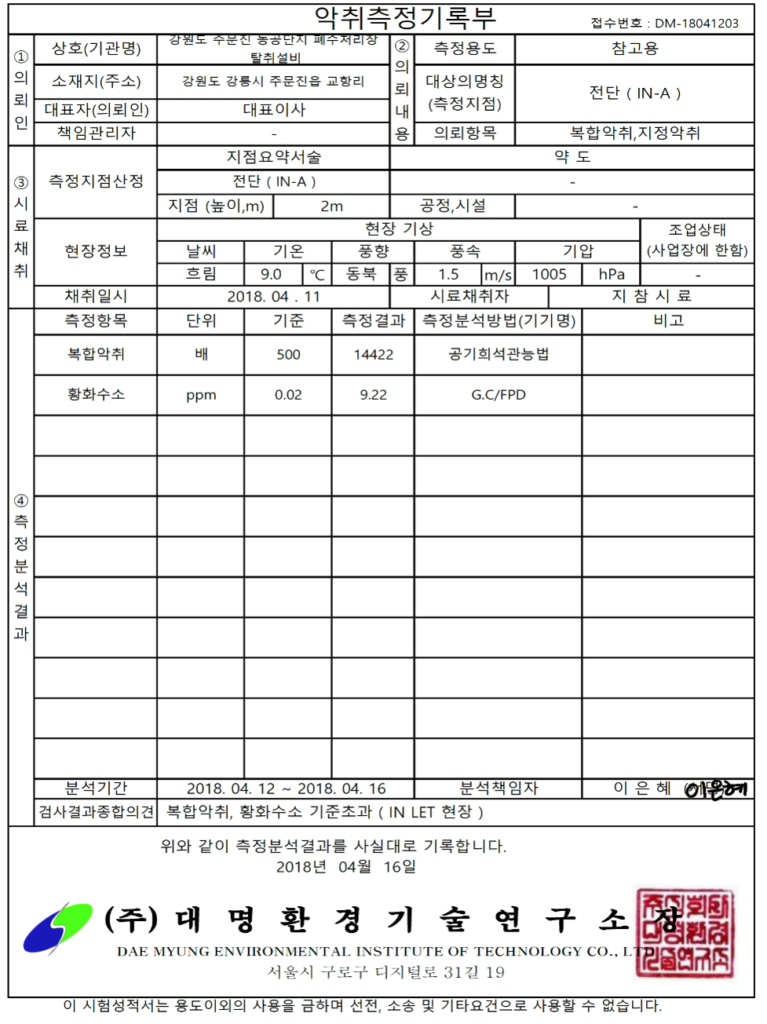
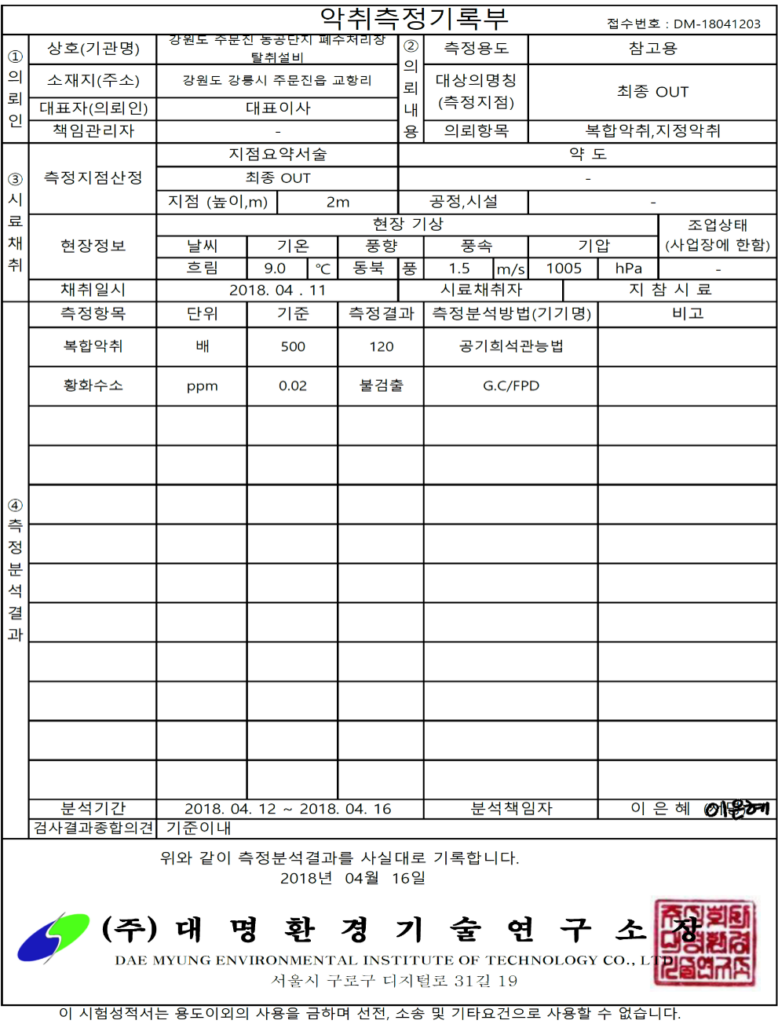
Jumunjin Agro-Industrial Complex, Gangneung (670 m³/min)
The existing system using sodium hydroxide and sodium hypochlorite solutions failed to adequately treat high-concentration odorous compounds, resulting in exceedance of the required performance criteria. After applying our proprietary process, the facility now fully meets the applicable performance standards.
Sodium hydroxide ↓ Sodium hypochlorite
Water wash → Iron chelate solution → Sodium hydroxide → Sodium hypochlorite

improvement results

parameter
inlet concentration
outlet concentration
complex odors
14,422
120

3-2. Case Study : Odor Control System Improvement – Jeju Food Waste Facility

location
improvement summary
previous process
case image
process after improvement
Leachate and food waste liquor pretreatment facility, Jeju Environmental Facilities Management Office (200 m³/min)
The existing process using sodium hypochlorite and a biofilter failed to adequately treat high-concentration odorous compounds, resulting in exceedance of the required performance criteria. After applying our proprietary process, the facility now fully meets the applicable performance standards.
Sodium hypochlorite ↓ Biofilter
Sulfuric acid → Iron chelate solution → Ozonated water → Sodium hypochlorite → Sodium hydroxide

improvement results

parameter
inlet concentration
outlet concentration
complex odors
100,000
300

3-3. case study : odor control system improvement – capital area landfill site

location
improvement summary
previous process
case image
process after improvement
50MW landfill gas power plant at capital area landfill site
The existing system using sodium hydroxide and sodium hypochlorite solutions failed to adequately treat high-concentration odorous compounds, resulting in exceedance of the required performance criteria. After applying our proprietary process, the facility now fully meets the applicable performance standards.
Sodium hydroxide ↓ Sodium hypochlorite
water wash → iron chelate solution → sodium hydroxide → sodium hypochlorite

improvement results

parameter
inlet concentration
outlet concentration
complex odors
1,000
100

3-4. case study : odor control system improvement - Yeongdeok Respia Sewage Treatment Plant, Yongin

location
previous process
improvement summary
previous process
case image
process after improvement
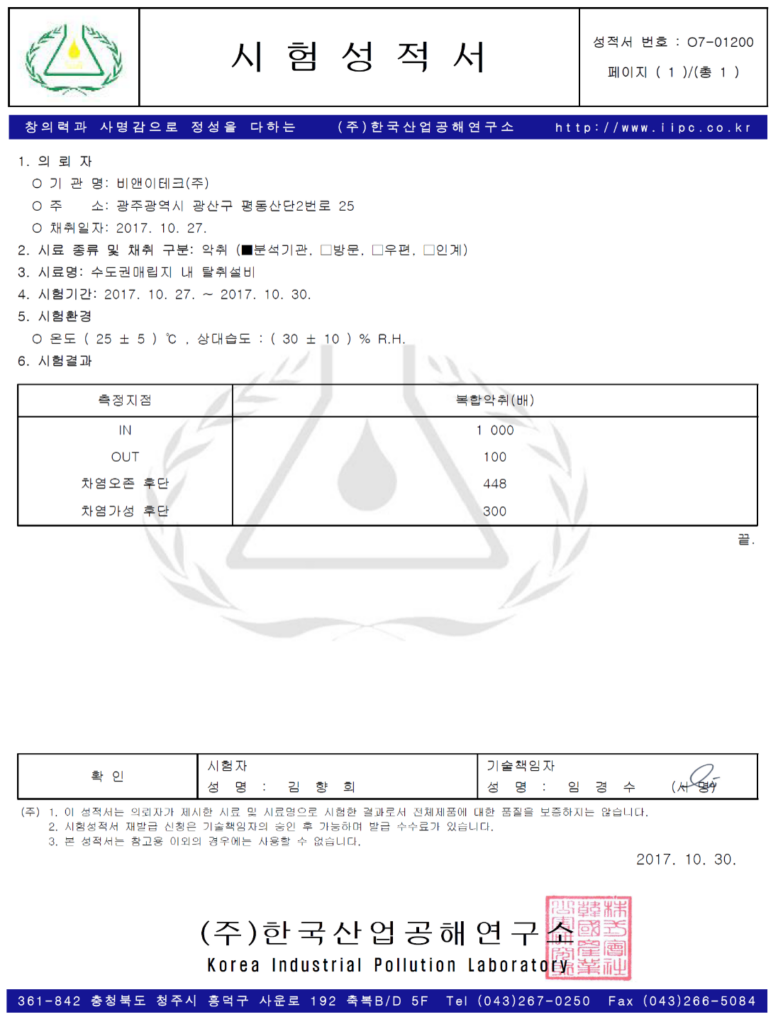
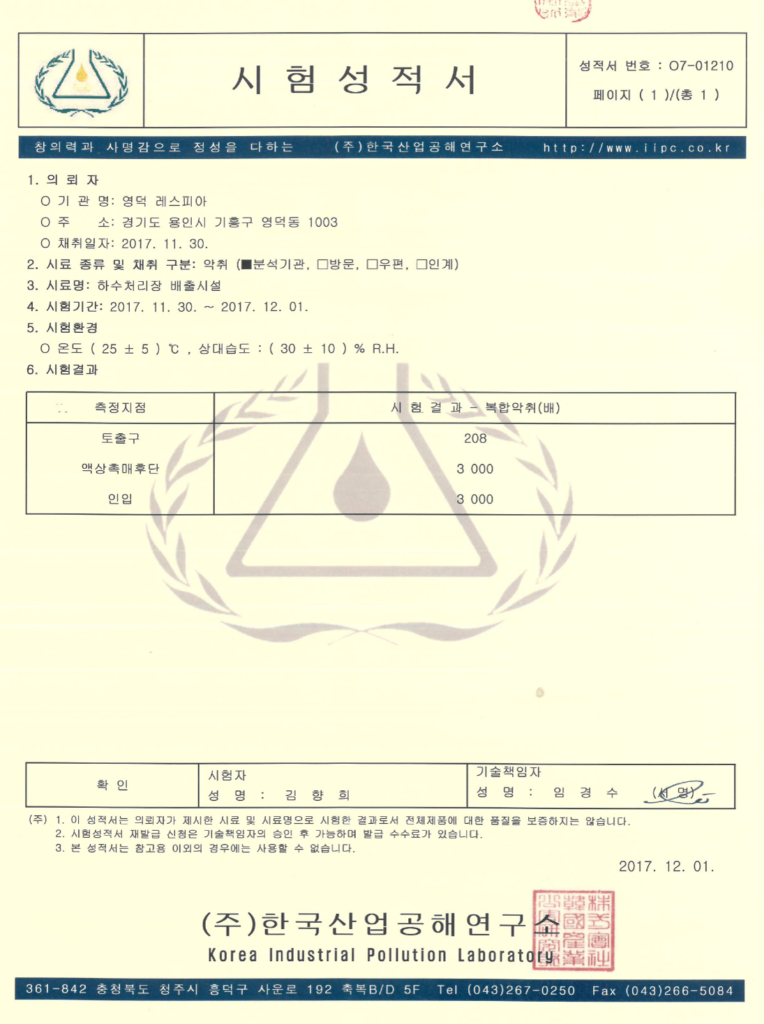
Yeongdeok Respia Sewage Treatment Plant, Yongin (300m³/min)
new installation
Following a technical review of alternative processes, our proprietary process was selected and is currently operating with emissions maintained below the required performance standards.
Sodium hydroxide → Sodium hypochlorite
water wash → iron chelate solution → sodium hydroxide → sodium hypochlorite

improvement results

parameter
inlet concentration
outlet concentration
complex odors
3,000
208

3-5. case study : odor control system improvement - Respia Sewage Treatment Plant, Yongin

location
improvement summary
previous process
case image
process after improvement
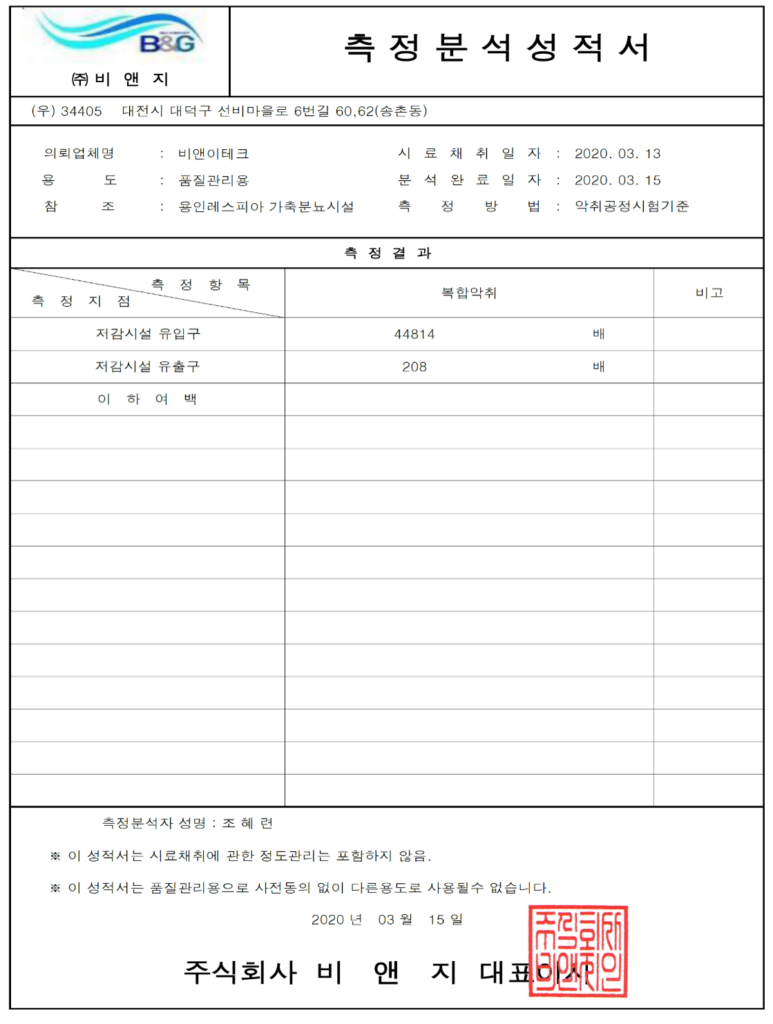
Respia Sewage Treatment Plant, Yongin (500m³/min)
The existing process using sodium hypochlorite and sodium hydroxide solutions failed to adequately treat high-concentration odorous compounds, resulting in exceedance of the required performance criteria. After applying our proprietary process, the facility now fully meets the applicable performance standards.
Sodium hydroxide → Sodium hypochlorite
water wash → iron chelate solution → sodium hydroxide → sodium hypochlorite

improvement results

parameter
inlet concentration
outlet concentration
complex odors
44,814
208

3-6. case study : odor control system improvement – Gangneung wastewater treatment plant

location
improvement summary
previous process
case image
process after improvement
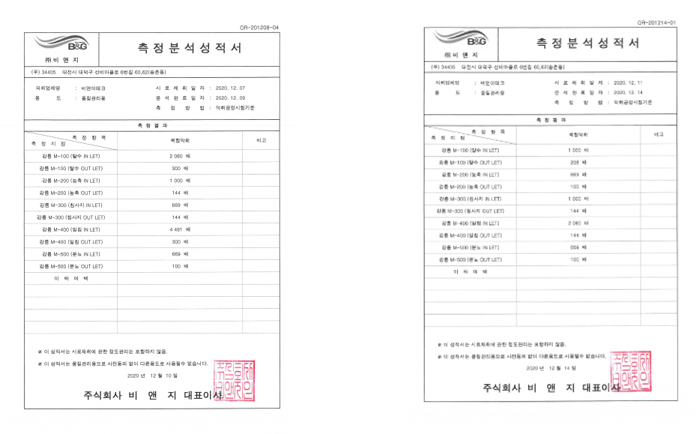
Gangneung wastewater treatment plant (100, 200, 350, 650 m³/min)
The existing system treated odors by routing aeration air from the biological reactor to a biofilter, but it failed to adequately remove high-concentration odorous compounds, resulting in exceedance of the required performance criteria. After applying our proprietary process, the facility now fully meets the applicable performance standards.
Aeration air from biological reactor, biofilter
ron chelate solution → sodium hydroxide → sodium hypochlorite

improvement results

parameter
inlet concentration
outlet concentration
complex odors
4,481
≤ 300

4. Economic Feasibility Comparison

high-concentration odor removal -high-concentration odor condition : complex odor 5,000 or more, deodorization airflow : 500CMM, inlet hydrogen sulfide : 50ppm

category
Our multi-stage deodorization process
Three-stage chemical scrubber system
Two-stage chemical scrubbers + biofilter
facility configuration
Iron chelate solution+NaOH+NaOCl(H₂SO₄ )
NaOH+H₂SO₄+NaOCl
NaOH+H₂SO₄+NaOCl+ Biofilter
facility cost
equipment cost
KRW600,000,000
equipment cost
KRW600,000,000
equipment cost
KRW550,000,000
operation & management cost
KRW133,120,800 / year relative index 1.0
KRW133,120,800 / year 1.7
KRW217,983,520 / year 1.6
* relative index of our multi-stage deodorization process = 1.0

basis of cost calculation

description
Our multi-stage deodorization process
Three-stage chemical scrubber system
Two-stage chemical scrubbers + biofilter
annual operation & management cost (KRW/year)
power cost
-annual electricity cost
= 95 kW × 24 hr/day × 365 days/year × 0.8 (operating factor) × KRW 80/kWh
= KRW53,260,800/year

-chemical cost
(iron chelate make-up solution + sodium hydroxide + sodium hypochlorite)
= 21,200,000 + 36,000,000 + 22,000,000
= KRW79,200,000won/year

-comsumable replacement cost(pall rings and filter cloth)
= KRW660,000/year
(replacement once every three years)
power cost
-annual electricity cost
= 90 kW × 24 hr/day × 365 days/year × 0.8 (operating factor) × KRW 80/kWh
= KRW50,457,600/year

-chemical cost
(NaOH+H₂SO₄+NaOCl)
= 91,050,000 + 54,112,000 + 25,440,000
= KRW170,602,000/year

-comsumable replacement cost(pall rings and filter cloth)
= KRW660,000/year (replacement once every three years)
power cost
-annual electricity cost
= 93 kW × 24 hr/day × 365 days/year × 0.8 (operating factor) × KRW 80/kWh
= KRW52,139,520/year

-chemical cost
(NaOH+H₂SO₄+microbial cultures, nutrient, etc.)
=91,050,000 + 54,112,000 + 18,682,000
= KRW163,844,000/year

-comsumable replacement cost(pall rings and biofilter media)
=KRW2,000,000원
total KRW 133,120,800/year
total KRW 133,120,800 / year

Jumunjin Agro-Industrial Complex Final Wastewater Treatment Plant (670 m³/min)

Grit chamber at Gangneung Public Wastewater Treatment Plant (350 m³/min)

Jeju Environmental Facilities Management Office (200 m³/min)